
Home › How we build it
How we build it
Built at investment grade. Here is what that means.
A vehicle that costs $300,000 should still be working in year ten. Most of what decides that is invisible once the skin goes on: the cage, the sidewalls, the floor, the cabinet substrate, the wiring. This page shows all of it, and tells you what to ask any builder, including us.
The construction column
The column the spec sheet is missing
A buying agent lines up two spec sheets, checks the box for "cabinets" on both, and never learns that one is particleboard and one is solid hardwood. Here is HLE's column for every body it builds. Run it against any proposal, ours included.
What HLE builds
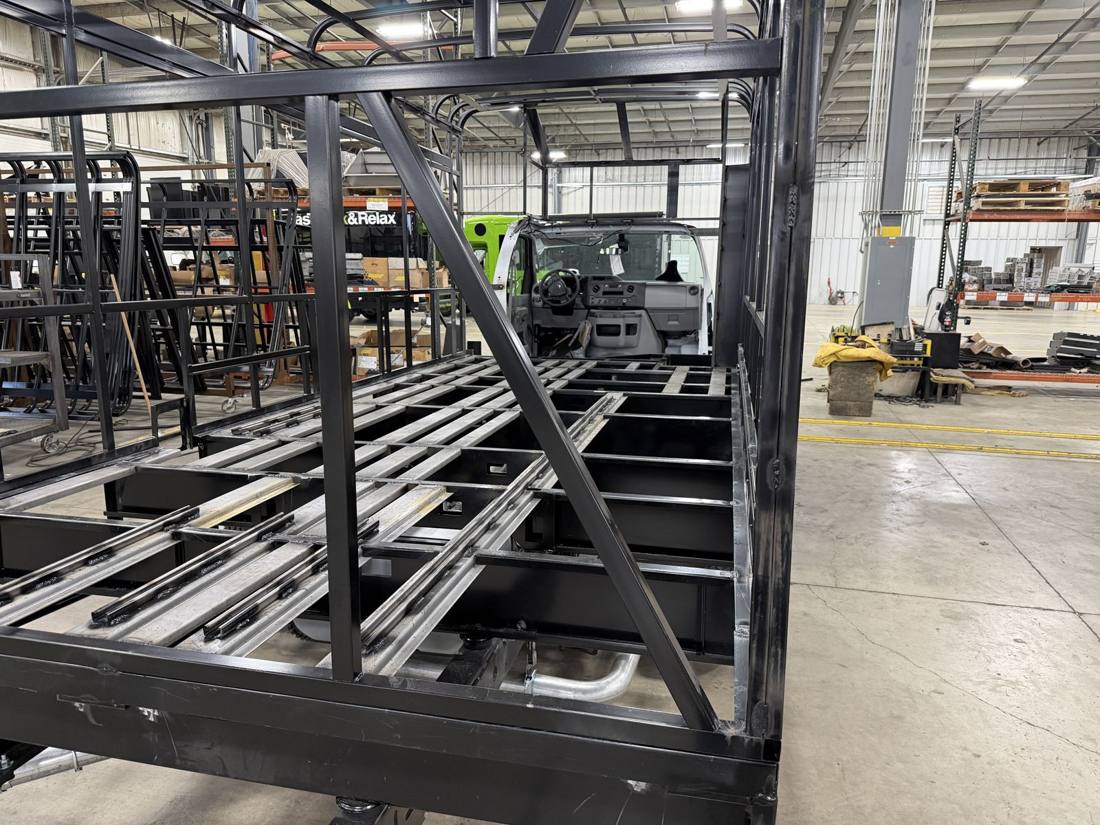
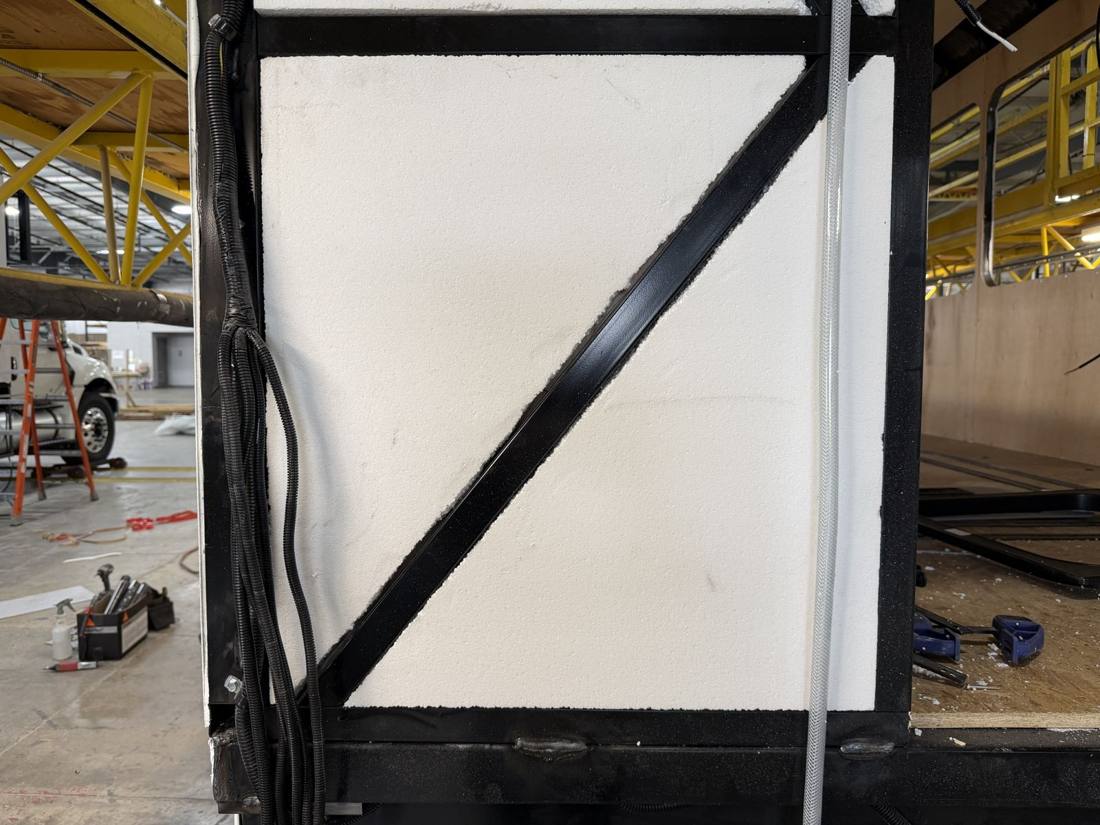
1.5 in square steel tube cage, welded, powder-coated before the body goes on. Foam insulation cut to each cavity, not stuffed.
What to check on any proposal
Ask for the tube section and whether the cage is coated before or after assembly. "Steel frame" says neither.
What HLE builds
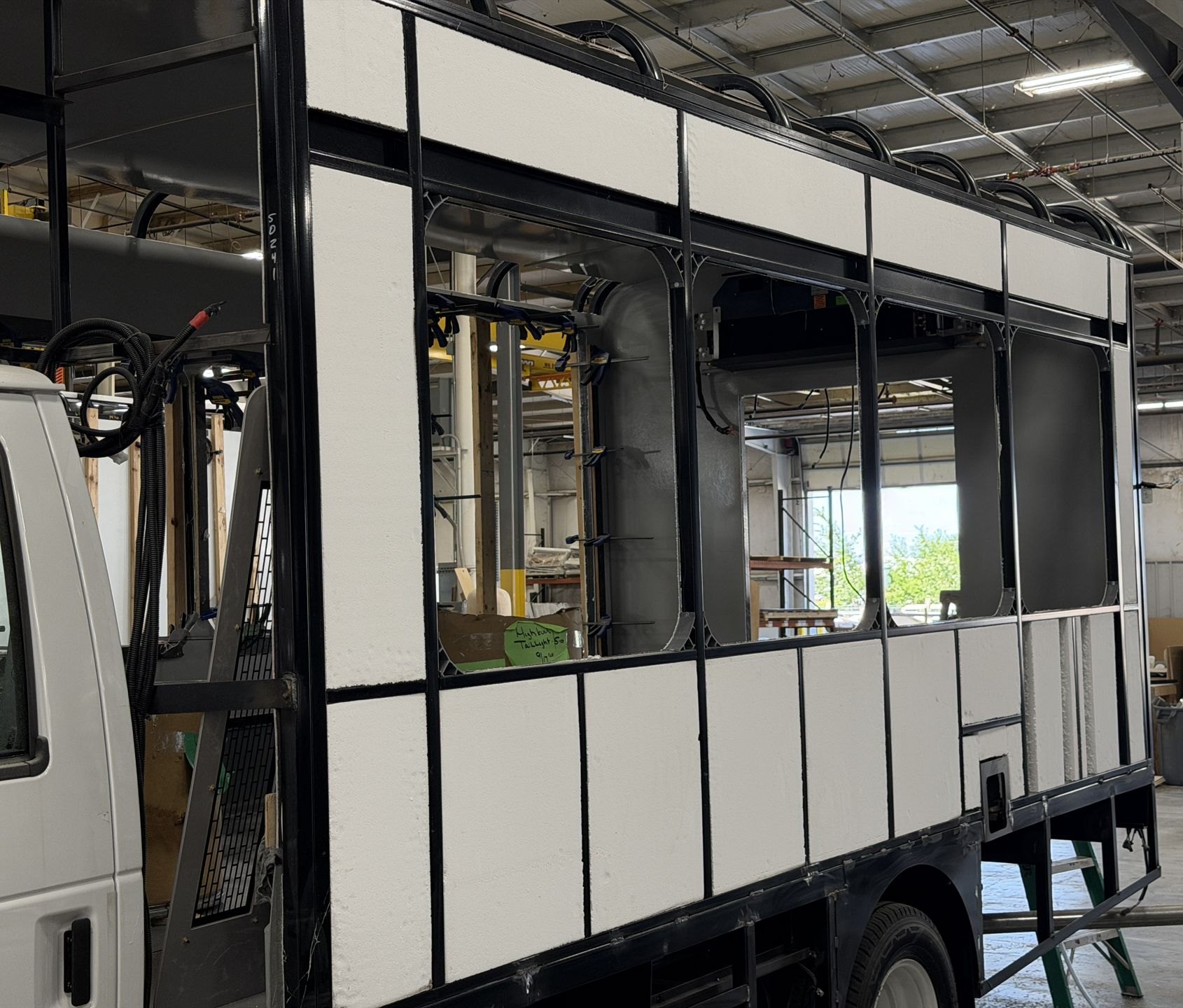
One-piece pressure-laminated sidewalls with no horizontal seam. Windows cut from the panel.
What to check on any proposal
How many pieces is the sidewall, and where do the seams fall? Every seam is a future leak.
What HLE builds
One piece of Impact Guard composite across the roof, bonded to the cage over the steel roof structure. No thin fiberglass that cracks under UV or a hailstone.
What to check on any proposal
Ask what the roof skin is and where its seams are. The first leak is at the seam you cannot see.
What HLE builds
Resin-infused composite subfloor over the cage; it sheds water instead of absorbing it. Seamless medical-grade sheet vinyl coved up the wall where the use calls for it.
What to check on any proposal
What is under the vinyl? A plywood subfloor goes soft after one winter of mopping.
What HLE builds
Solid hardwood cabinetry with stainless hardware. PerformMAX 500 resin-infused panel in wet areas, not plywood, with sealed edges. No particleboard anywhere a sink, a fridge or a mop can reach.
What to check on any proposal
Ask for the substrate by name. "Cabinets" on a spec sheet can mean particleboard that swells and fails in two to four years.
What HLE builds
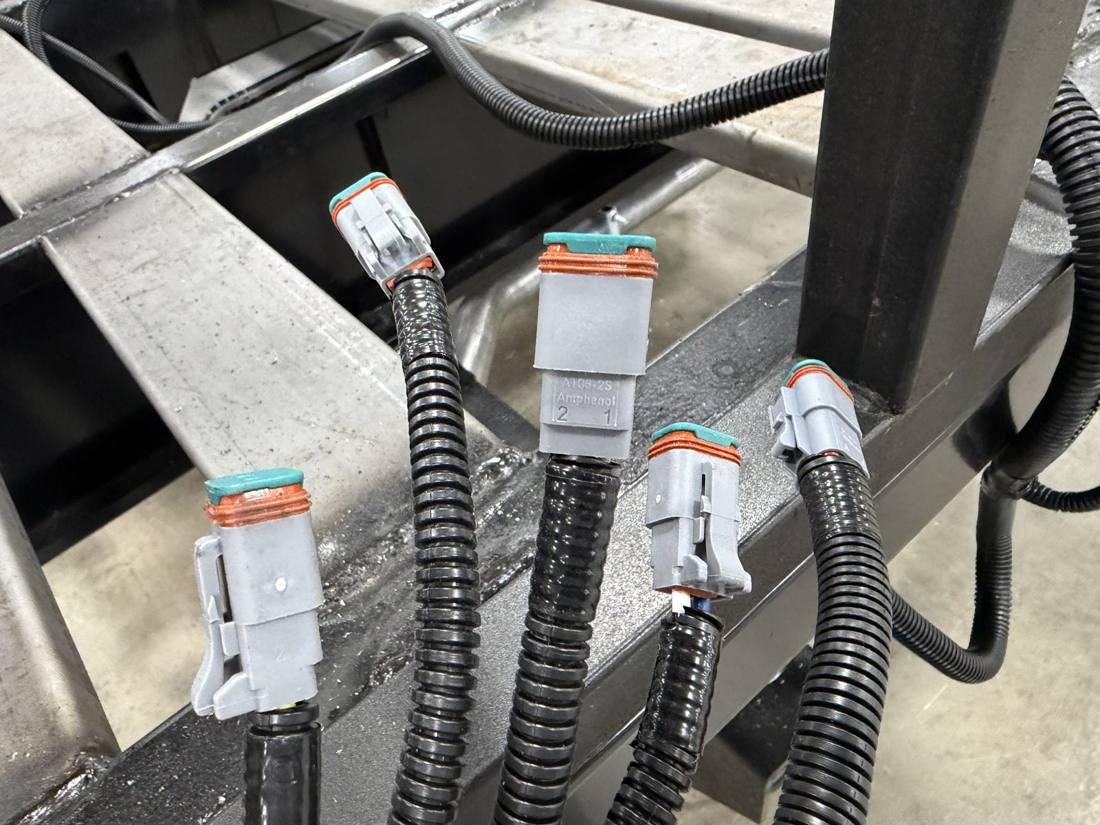
Harnesses built in HLE's own shop with marine-grade connectors, every circuit labeled at both ends, a panel drawing delivered with the unit.
What to check on any proposal
Ask for the panel drawing before delivery. If they cannot produce one, the next technician cannot either.
What HLE builds
Every unit through the rain booth: at least 15 minutes under full spray with a person inside looking for water, then straight into a road test with someone inside still watching for leaks.
What to check on any proposal
Ask whether every unit is water-tested and how. A hose in the yard is not a test.
The roof is one piece of Impact Guard composite. Watch the roof impact test on video.
Station by station
How we build it, in order
What kills a specialty vehicle is water. Everything on our line exists to keep it out.
Ask any fleet manager what takes a mobile unit out of service and you get the same answer: rot, rust and corrosion. Water finds a seam, sits in plywood, and eats the vehicle from the inside while the paint still looks fine. Every station in the High Level Enterprises plant in Wakarusa, Indiana exists to close that path. This is how an HLE body goes together, in order.
1. Steel and laser
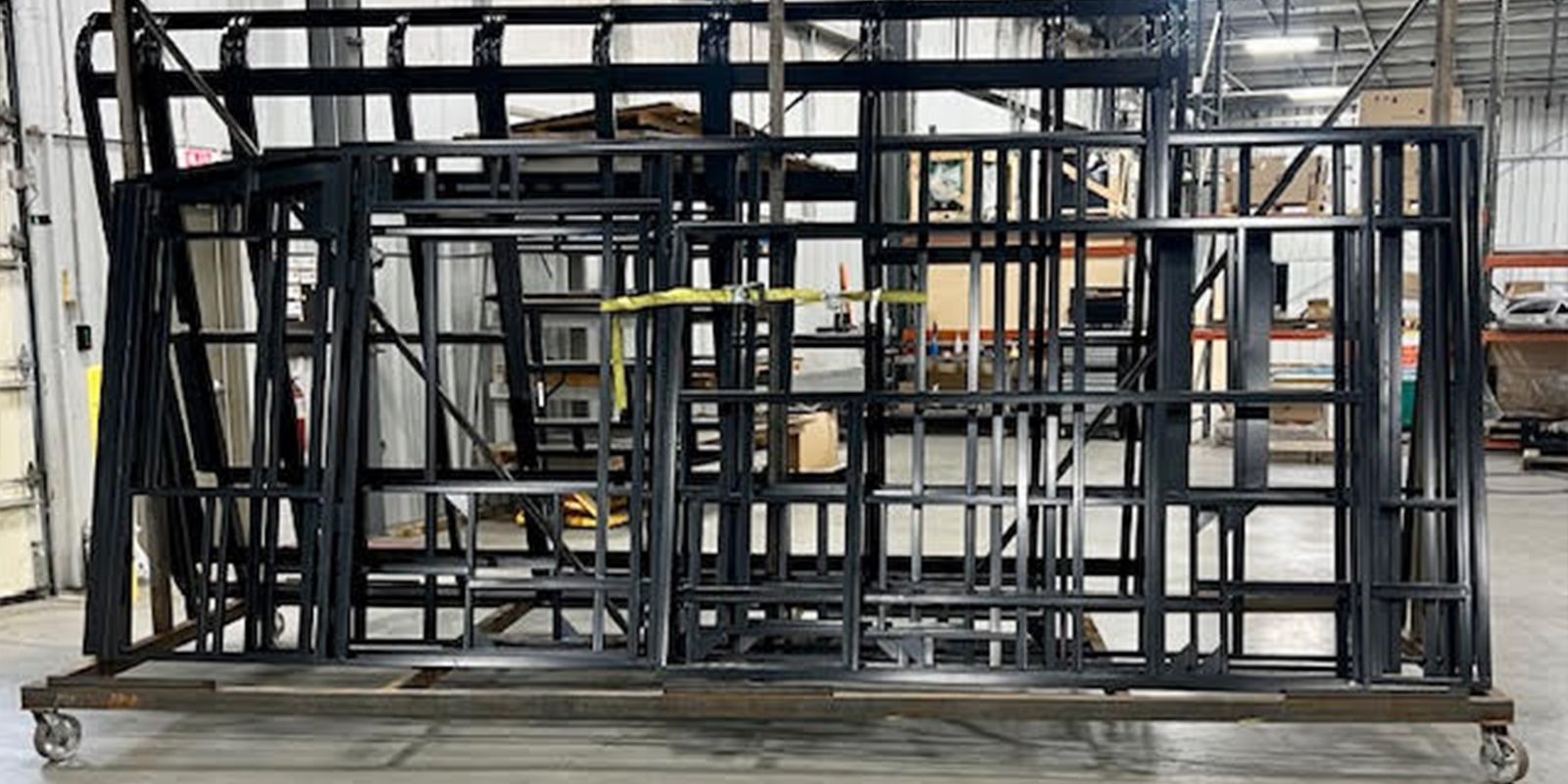
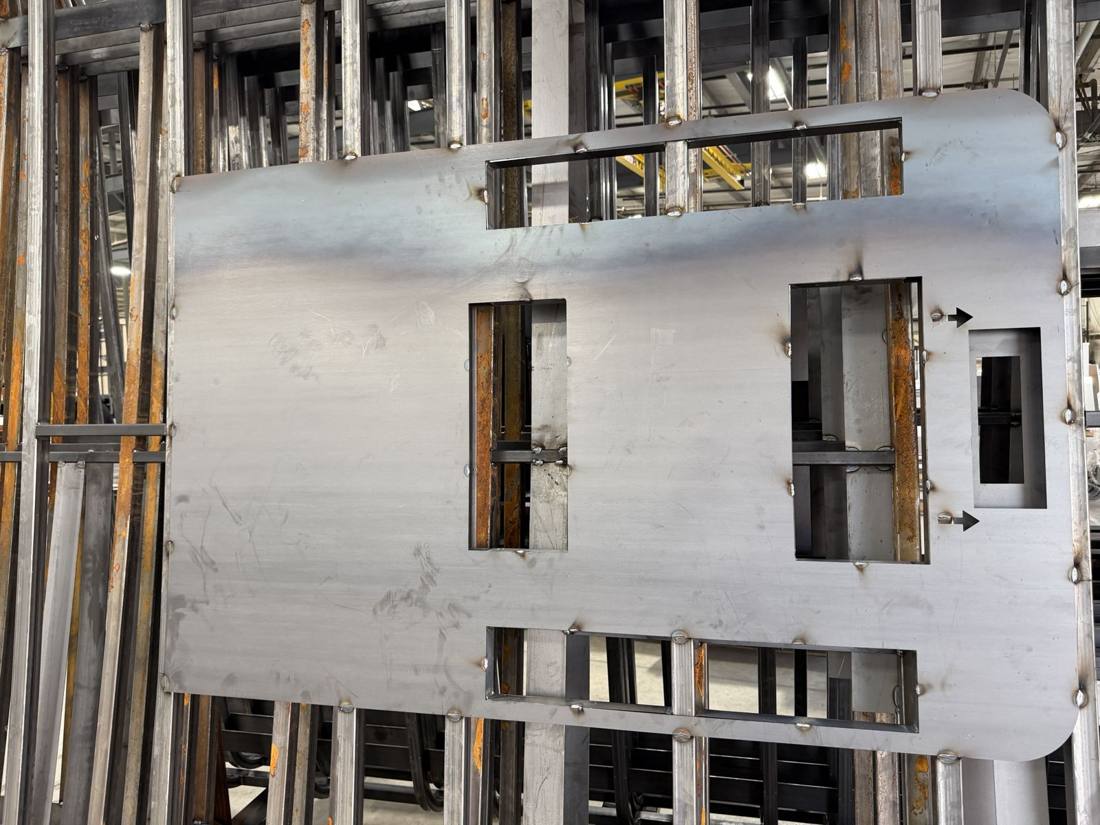
Steel arrives pickled and oiled. Cross-members, brackets, mounts and door frames are laser-cut and bent in-house on a TRUMPF laser and press brake — clean, burr-free, dimensionally consistent, from sheet to bracket without leaving the building. Wire pass-throughs are lasered here too, then fitted with grommets so a wire never rides a raw edge.
2. The cage
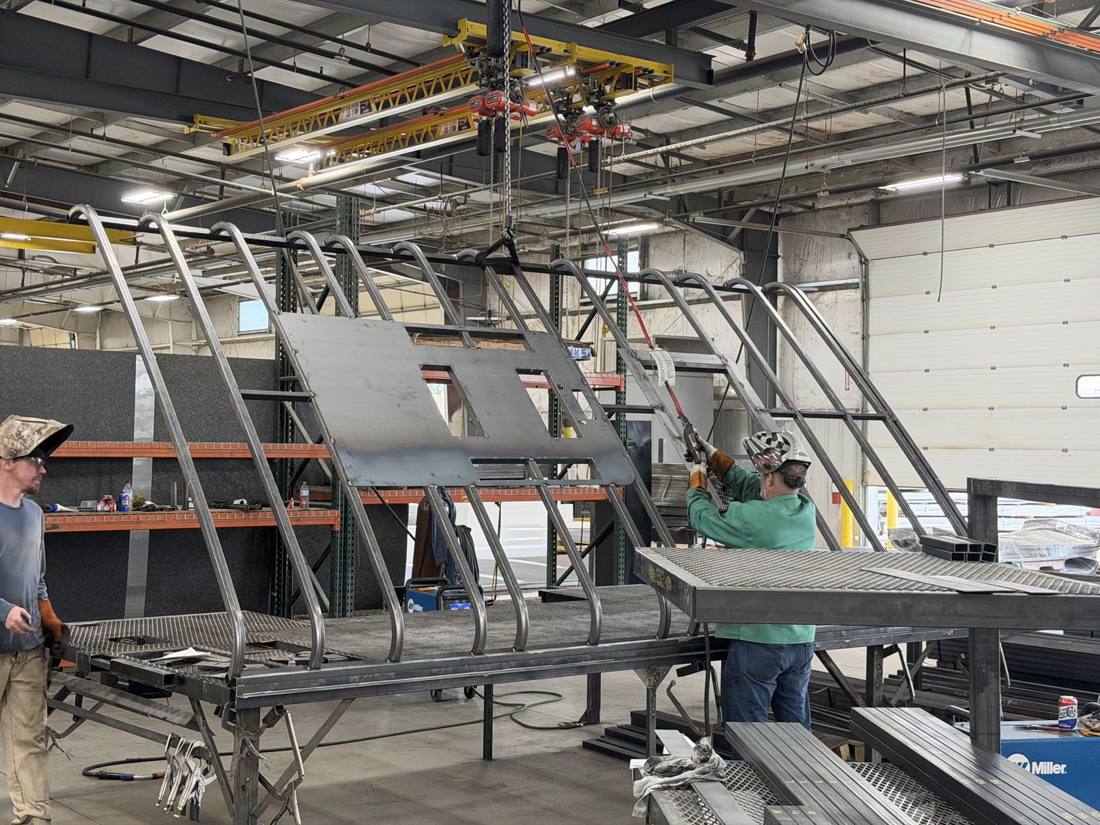
1.5 × 1.5 inch steel tube, stitch-welded by certified welders never more than six inches apart, built directly on the chassis, station by station — not on a jig to be lifted on later. Doubled roof tube. Welded rear-wall X-brace. The skirt is welded to the cage as part of the structure rather than a separate panel screwed on at the floor line, because that screw line is where rust starts on most bodies. Door openings are framed in steel inside the cage; the entrance door hangs in a powder-coated steel portal, not a fiberglass opening. Full-perimeter welds are the standard, not a bid-spec extra.
3. Powder coat
Powder coat is the one step HLE sends out, to a shop that does nothing but powder coat. Every structural component is sandblasted, chemically washed and rinsed, then gets a 400°F powder coat. The magnetically charged powder wraps into crevices primer never reaches. Nothing structural on an HLE body is painted. The alternative in this industry is red-oxide primer sprayed on the visible side only — it lifts under a piece of tape, and it leaves bare steel inside the wall cavity where nobody will see the rust start.
4. Foam
Every piece of insulation is closed-cell EPS board, cut to its exact frame cavity off the weld-shop prints and glued — not taped — in place. One hundred percent coverage, no condensation pockets, and it fills the full depth of the tube so there is no air gap behind the wall. The industry alternative is pulled from a bin, snipped, stuffed, and patched with spray foam.
5. Lamination
The sidewall goes on as one continuous pressure-laminated panel from roofline to skirt: an Azdel inner layer that will not wick water, bonded to a Filon exterior with hot-melt adhesive, then pressed onto the steel. No beltline seam. No floor-line seam. Most bodies are built from a strip above the windows, fillers between them, a strip below, and a separate skirt — every joint a place for water to get in.
6. The roof
One piece of Impact Guard composite across the whole span (watch the roof impact test), reinforced through the panel and around the roof radius, so the strength is in the structure and not in the surface. It folds back on itself without cracking; the 1/8-inch fiberglass on most bodies snaps by hand and gets weaker every year in the sun. Where a roof-mounted air conditioner, mast or antenna goes, a laser-cut, powder-coated steel plate is welded into the roof structure first, and the unit bolts to steel rather than to fiberglass and plywood.
7. The floor
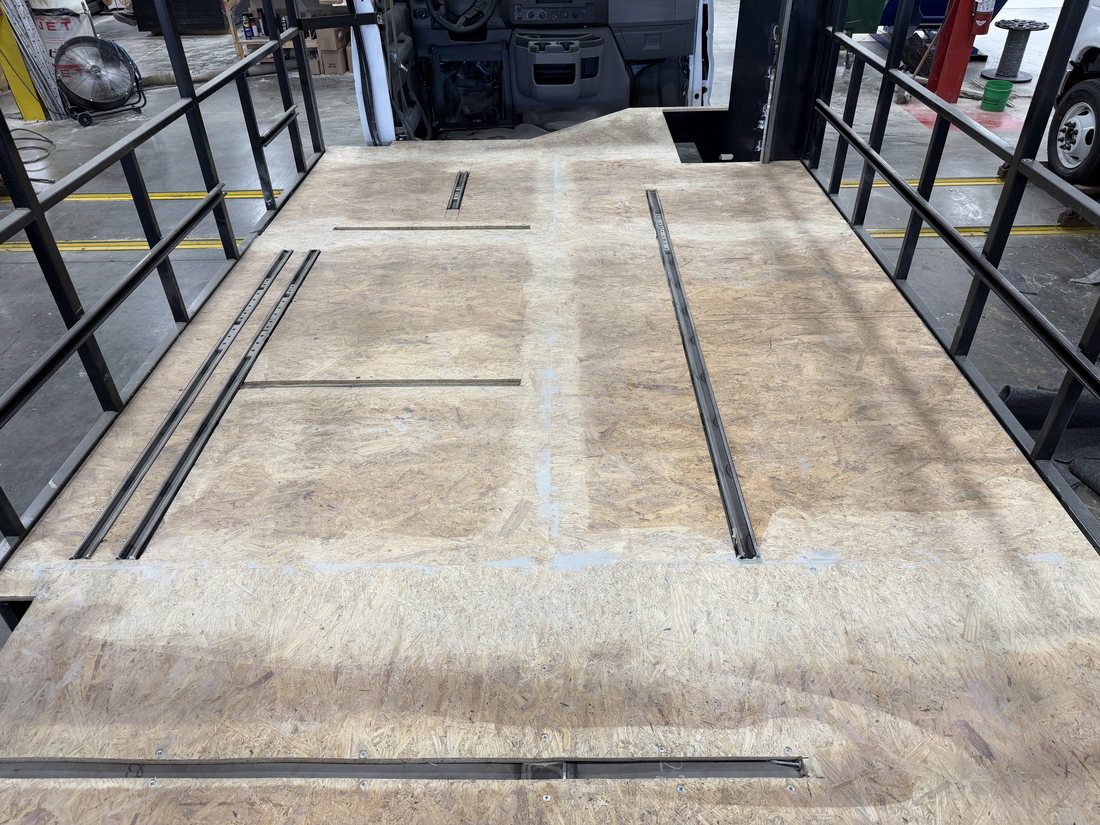
5/8-inch PerformMAX 500 resin-infused subfloor on laser-cut cross-members, edge-encapsulated in fabricated angle and sealed at every seam. It sheds water instead of soaking it up. The typical alternative is 1/2-inch plywood, which does the opposite. Sealant at every cross-member, seam and wheel well; welded wheel-well backers with a taped perimeter so a wheel well is a six-screw field repair rather than a panel replacement.
8. The harness shop
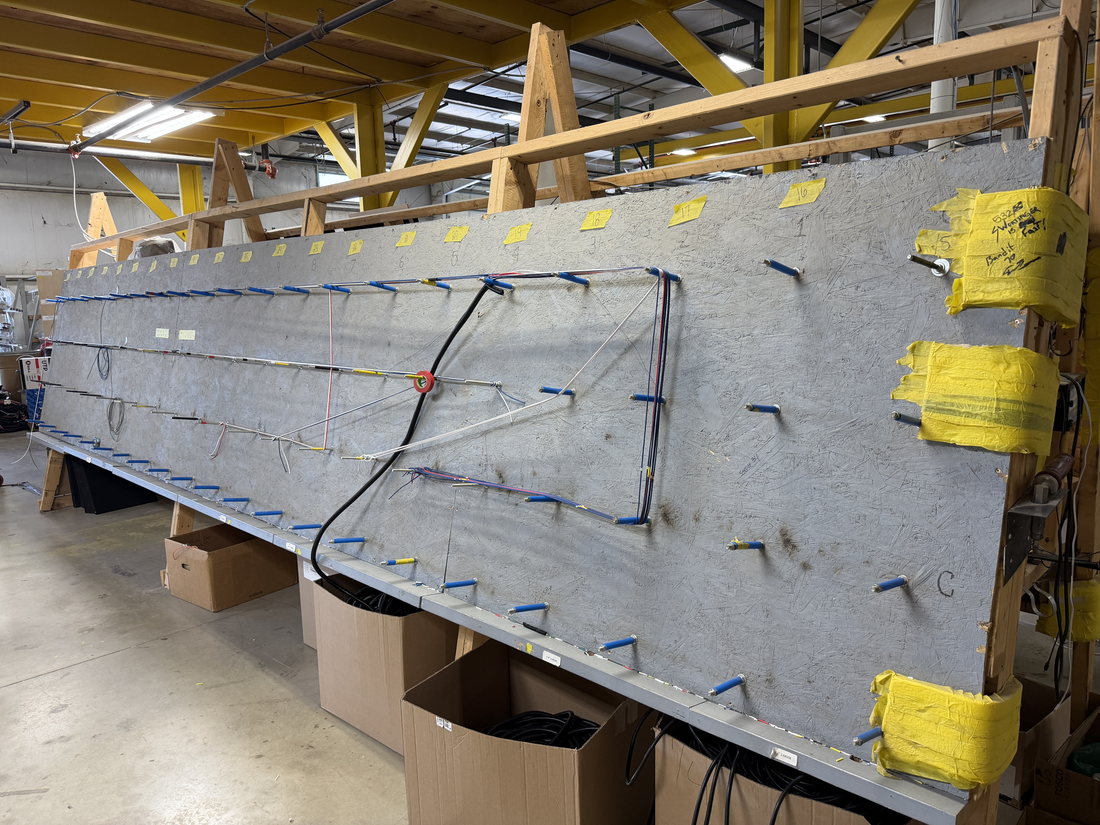
Every harness is built in-house, to length, on a full-size board. Watertight marine-grade connectors on every exterior connection. Wire loom over printed wire. Butt connectors and tap splices are banned in the building. Lights ship pre-plugged. Every electrical connection gets corrosion spray, not just the battery posts. Your fleet shop gets the documentation.
9. The rain booth and the road
Fifteen minutes minimum under full spray, longer when a spec calls for it, with a person inside hunting leaks — every unit. Then straight into a road test, with someone inside still watching for water and hard braking and acceleration to surface leaks and rattles, and a final inspection packet signed off by every department before delivery. Check sheets travel with the unit station to station; a group leader signs before it moves.
What this means for a specialty vehicle
A mobile clinic, a command post or a transport vehicle is a seven-year asset at minimum, and often longer. The equipment inside it will be replaced; the body has to still be sound when that happens. HLE builds every body the same way whether it will carry a PET/CT scanner or a dozen detainees, and that is the reason the plant can put a unit through a rain booth and a road test and stand behind it.
The people
We weld plain steel — no aluminized, no galvanized — as a permanent choice, because welding those steels makes welders sick. We use the steel that lets our welders go home healthy. Quality gets built by people who stay. And we are deliberately not a forty-a-day line: every body is built on its chassis, moved station to station only when the group leader signs the check sheet.
What each station prevents
Every station above closes one of the five ways a specialty vehicle fails. What fails, and when lays out the failure modes and the years they show up in; How to vet a builder turns them into twenty questions for any proposal; the inspection checklist is what to look at on delivery day.
More construction photos
Inside the body, before the skin goes on
Warranty, in plain words
What is covered, for how long, and what is not
| Layer | Term | Who |
|---|---|---|
| Conversion | 3 years / 36,000 miles | HLE |
| Structure (cage, body) | 5 years / 100,000 miles | HLE |
| Subfloor | 7 years | HLE |
| Chassis and drivetrain | The chassis maker's warranty | The chassis maker: Ford, Chevrolet, Freightliner, International, Mercedes-Benz, Ram |
| Installed equipment | The equipment maker's warranty | Equipment maker |
The terms HLE's specialty proposals quote. Nothing prorates or steps down with age or mileage, and replacement parts stay available at least 2 years past the warranty. The full table, with what to check on any proposal, is on warranty; after delivery, see service and parts. Ask for the written warranty with any proposal, ours included, and read it with what a warranty actually covers open.
The plant
Wakarusa, Indiana. Come and look.
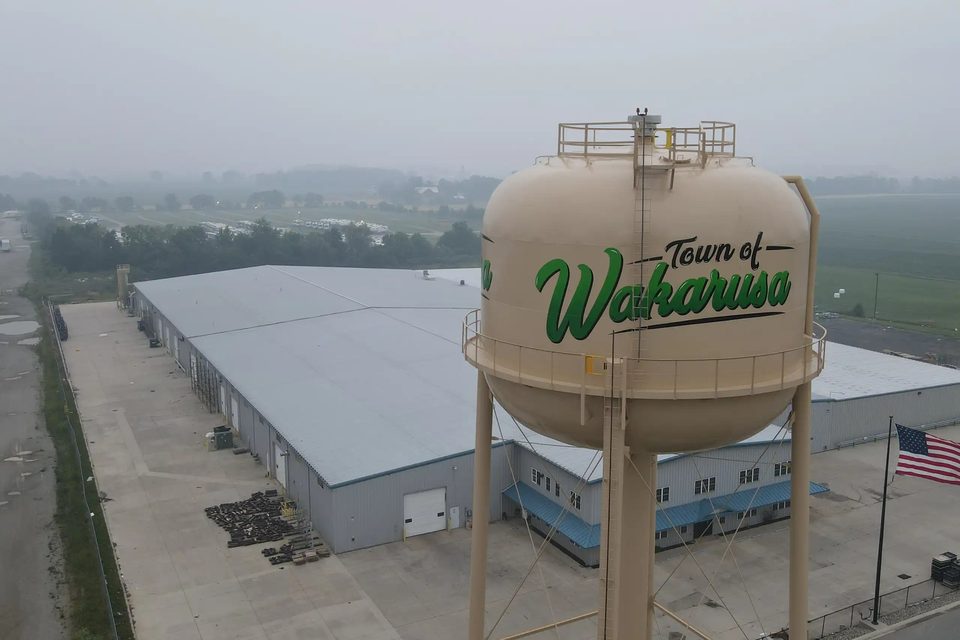
Every unit is built in one plant: 147,000 sq ft on 13.43 acres at 1060 E Waterford Street. If you are deciding between builders, the fastest way to settle it is a day here: the cage shop, the rain booth, a unit in final assembly. We book the visit around the units that are open.
On video
The plant, on video
Request a proposal
Tell us the vehicle. We tell you what it costs and what to attach.
Pick a plan or describe the program. Say whether you need a price, a bid package, a grant kit or a formal proposal. A person at HLE reads every request; nothing goes to a queue.
Or call 574-343-2150, 7:30 to 4:30 Eastern, and ask for Tabatha.